NEUROLOGICAL/MOTOR SCREENING

This is the screening I have used for over 20 years to determine deficits and then prescribe a home remediation program for parents to conduct daily. These problems need to be addressed every day. This screening is meant for five-year olds and older. You can research each area on the Internet.

PROPRIOCEPTION (BODY AWARENESS)

Can touch examiner’s index finger with his index finger when moved in front of his

eyes (12 inches away from eyes)

With eyes closed, can bring both index fingers together in front of eyes You must demonstrate first.

With eyes closed, can bring both index fingers together to touch the nose

BALANCE

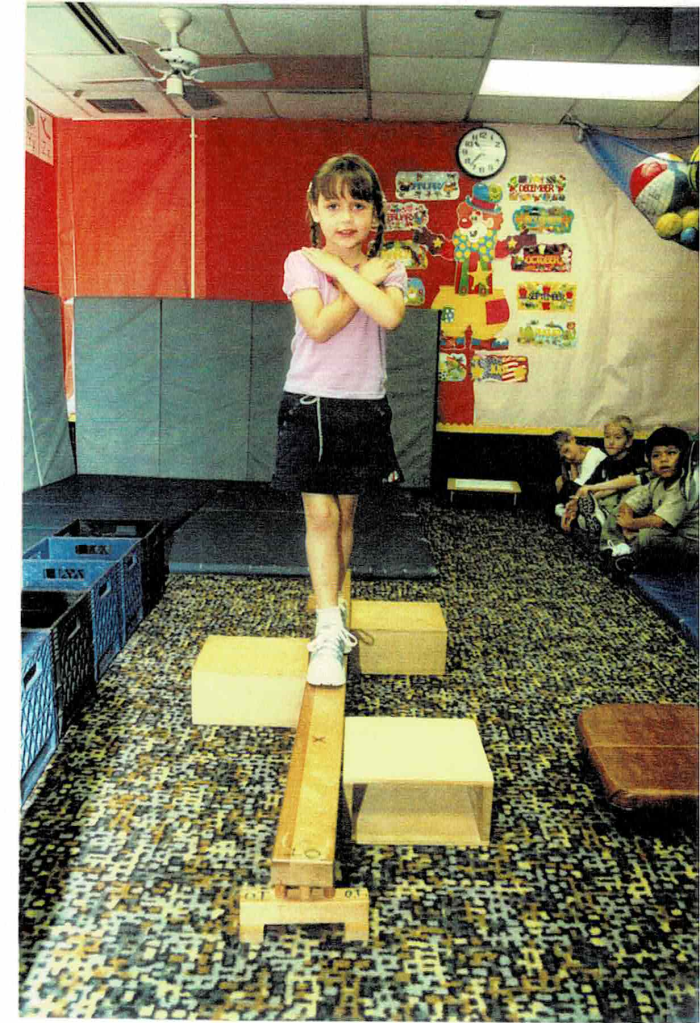
Can walk heel to toe forward six feet

Can walk heel to toe backward six feet

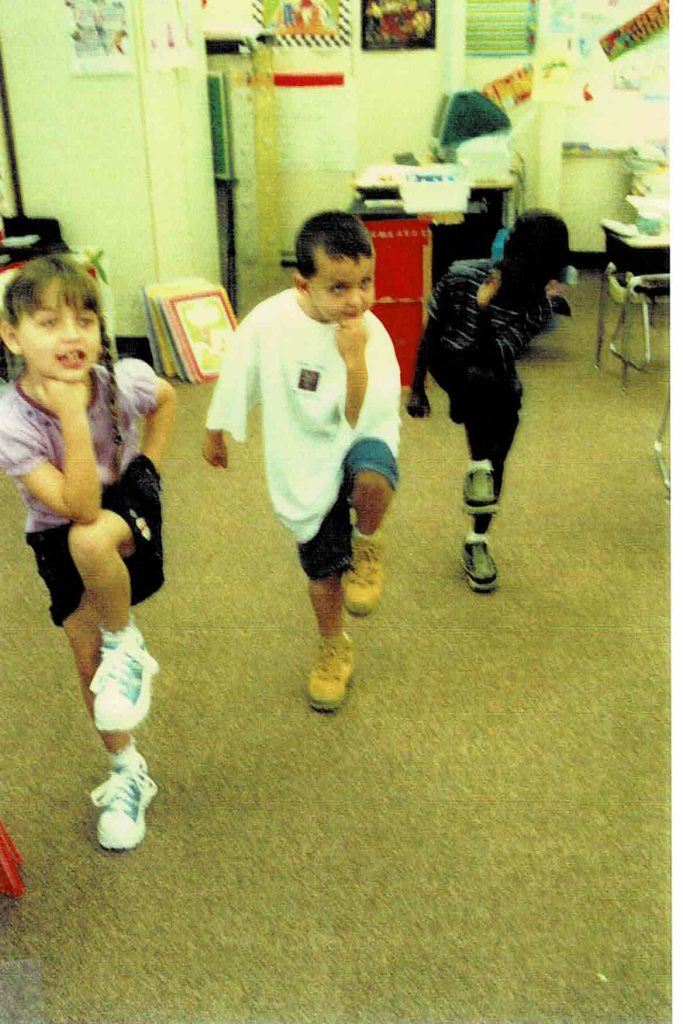
Can stand on right foot to the count of ten

Can stand on left foot to the count of ten

DIRECTIONALITY/CROSSING MIDLINE

Can make an X

You say raise your right hand and place on your left shoulder

You say raise your left hand and place on your right shoulder.

If the child does not know right from left, buy a red string bracelet and have him wear it daily on his right wrist, often say RED, RIGHT.

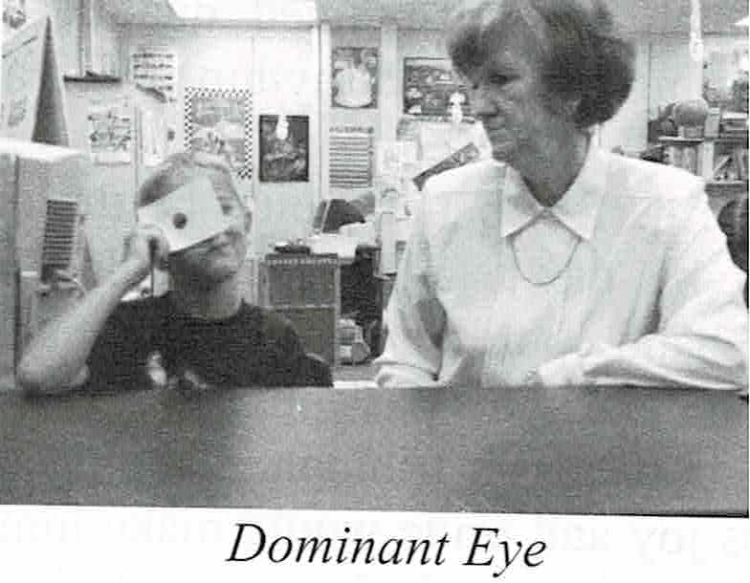
DOMINANCE

Test dominant hand, eye, foot and ear look on Internet to find out how

EYE CONVERGENCE

Can follow pencil in examiner’s hand with eyes (without moving the head) in front of eyes (about 12 inches away ) and then examiner will bring pencil to touch the nose. Eyes should converge or come together.

SKIPPING

By age six, child should skip smoothly 12 feet.

This is very difficult to explain so if you have questions, email me at owenssusan26@mypearlprogram
Building Success

When I taught courses at the college for special ed teachers, these are some ot the tips I shared to help parents of autistic and all special needs children.

  1. Sing everything. Make a rap or song out of simple activities like: This is the way I brush my teeth, brush my teeth, brush my teeth, this is the way I brush my teeth. Download easy kid songs like Row Row Row Your Boat and let the child beat on the drum or a pot to the rhythm.
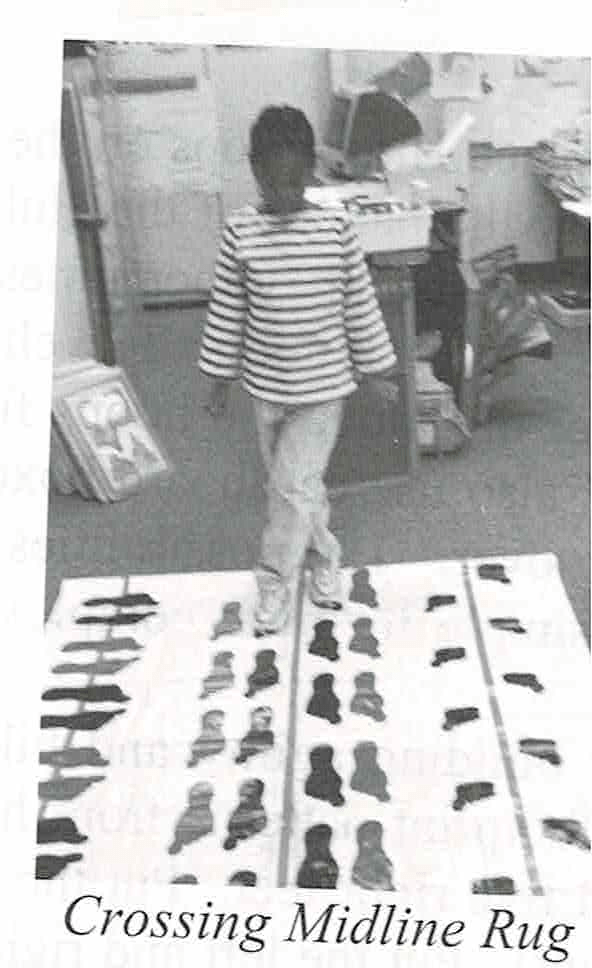
  2. Cross midline often Search the Internet to find out why this is so important and activities to do.
  3. Build an obstacle course in the house or outside. Again, search on the Internet for how to do it.
  4. Restrict FOOD DYES and sugar. Food dyes are terrible for ADHD children.
  5. Make sure to drink plenty of water. The brain is 73% water, and I believe the majority of children today are dehydrated.
  6. Research brushing for sensory issues. I found it could help some children with sensory issues.
  7. Check the child’s balance. By age 5, can he stand on one foot to the count of 10? Can he skip by age 6? If not practice balance daily. Balance is the precursor of memory.
  8. When the child improves, say I’M GOOD, I’M VERY GOOD, AND I CAN DO GOOD THINGS.

I’M GOOD,I’M VERY GOOD

A simple strategy I used with my low-performing first graders was this simple rap. Many of them were constantly reprimanded, put down and made to feel inadequate.

I would have them do this simple rap to enforce self-esteem and improve self-image.

I’M GOOD (PUT RIGHT HAND ON LEFT SHOULDER)

I’M VERY GOOD (PUT LEFT HAND ON RIGHT SHOULDER)

AND I CAN DO GOOD THINGS! ( GIVE THEMSELVES A GREAT BIG HUG)

When your child does something good, have them do this simple activity. Repeat throughout the day as they do things that are positive. When my husband would cook a good dinner ,even he would say it It is very positive and can lead your child to truly believe he does have worth.

Building Neural and Motor Pathways

If your child goes to OT, ask to watch a session. Then at home try to replicate the activities done there. I firmly believe neural and motor growth is much more beneficial when done daily rather than once or twice a week. When I had a program for Title 1 kindergarten and first grade students, I tested my children and then took those that had motor problems to the OT room and worked on balance, eye/hand coordination and muscle strength. It was amazing to see the improvement in these areas. It often took two years to remediate the lags, but it was time well spent.

The areas I tested were balance, crossing midline, proprioception, dominance, and directionality. Then we would work on them daily. I had one little girl who had a stroke in utero and had very severe problems with movement, with the left side almost immovable We worked for two years remediating lags. Last year I met her at the store and at age 20, she had no noticeable problems. Talk about a moment of pride, that was surely one for me. It can be done with daily consistent remediation.

Build an obstacle course in a room in your house. Include balance beam, hula hoops to jump in, milk crates to throw bean bags into, crawling tunnel and balls to bounce and catch. It can be fun and so great for neural/motor growth.

When your child completes it, say this little rap I did all the time with my students,

I’M GOOD, I’M VERY GOOD, AND I CAN DO GOOD THINGS

Proprioception

Proprioception is the ability of the body to know movement, location and actions of its parts. It is a sense of stability for the child. Children with poor proprioception will feel anxious and confused as they move through their environment. It is also known as body awareness.

To test for it, have your child close his eyes and bring both index fingers together to the nose. Then have the child close his eyes and bring both index fingers to touch together in front of the nose. You will have to demonstrate this for the child before you ask him to do it.

You can also move your index finger in front of the child and have him touch your finger with his index finger. Move it back and forth slowly about six inches from his nose.

Then with eyes closed, say put your hands on your head, on your belly, on your feet and on your knees etc.

Children should be able to do this by age four. If your child cannot, go on the Internet and search exercises to improve proprioception in children. They may also help with balance and coordination.

Can you imagine living in a world where you are not sure where your body parts are and what they are doing? This is just another area to explore to determine the perplexing world our dear children experience.

This is a rather complex subject, so if you have questions, you can email me at owenssusan26@yahoo.com

Balloon Ballet

A simple, fun way to improve balance, eye-hand coordination, convergence, and visual-motor integration, is Balloon Ballet. Inflate a balloon, play some classical music and tell the child to keep the balloon in the air and not let it touch the floor. I did this most mornings with my first graders, and they loved it. The first thing in the door each morning, they would ask if we were going to do Balloon Ballet?

WHAT THE BRAIN LOVES

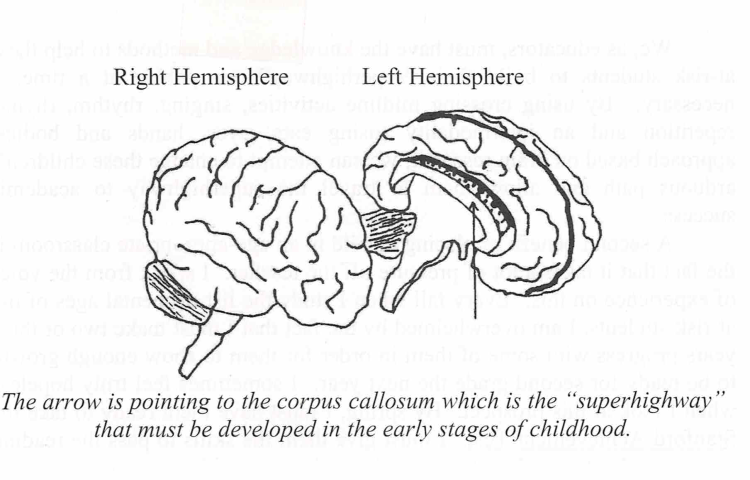
As we strive to teach all types of learners, we must look at the brain and discover what the brain requires to function properly. First of all, the brain is built by movement. Crawling is critical to build the corpus callosum, the beautiful super highway connecting the left and right hemispheres of the brain. It must be bilateral crawling (left foot, right hand) I had my first graders crawl every morning to music as I attempted to redo that pattern.

The second thing the brain loves is music. Music transcends both hemispheres, allowing both right and left- brained children to access both hemispheres. As I always say, SING IT, AND THEY WILL LEARN IT. Even putting concepts in the form of a rap or rhyme will aid long-term memory. That is how I taught the times tables to my third graders…6 times 7 will make you blue, 6 times 7 is 42. I also used rhymes to teach my first graders parts of speech such as a noun is anything that you see, like a bird or a cat, a dog or a tree. It is fun and fosters long term memory.

Lastly, but very importantly, the brain loves water. Almost three quarters of the brain is water. I believe many children today are dehydrated. All students should have water bottles on their desks to promote hydration. Every child in my program kept water bottles on their desks. For years in Florida, I watched classes come in from recess to get one sip of water at the fountain before the teacher said next.

So in conclusion, the brain loves MUSIC, MOVEMENT AND WATER.

WHY CAN’T HE JUST SIT STILL AND BE QUIET?

At every parent conference, that is the question the teacher asked me. I would reply he is just like his father, KINESTHETIC/ TACTILE. She would give me a dumb look and say, “What is that?” I would say that my dear son had to touch and move to learn.

About 15% of children have this learning style. They are the unfortunate ones who drive their teachers nuts. For years, teachers have put them right up front of her so she could keep an eye on him. Constant threats and reprimands do not help. If his dad warned him that morning he would get a paddling if he did not get a good report for the day, the poor kid spends the day trying his best to sit still and be quiet, while learning very little. By the end of the year, the teacher dislikes him, his classmates dislike him, and he hates himself..

In my classroom, after testing each child to determine his learning style, I would make special provisions for those who had high scores in kinesthetic/tactile. This is what I would do to make him comfortable.

Place his desk as far away from me as possible, Give him a squeeze ball or ball of clay for him to manipulate when needed. Glue a strip of velcro on the inside of his desk for him to rub. If necessary, I would make a large square of masking tape around his desk and told him he could sit on the floor just as long as he stayed within the square. I allowed him to stand when doing his work. I would put a bungee cord between the legs of his desk for him to pedal with his feet. This gave him a chance to use his learning style just as the other children.

When the principal came to observe, he would look at the child and ask, ‘What in the world is wrong with him?” I would smile and just say he is just tactile/kinesthetic.

In all of my years of teaching, I never had the principal ask what that was even though I knew he probably had no idea but would not ever want to look stupid in front of a teacher.

These poor kids (with high I Q s often) never flourish in a highly-visual classroom with a steady stream of worksheets. They often quit school but get a job using their strengths and make a million dollars…But most end up in trouble and have a unrewarding adulthood when we could have done so much better for him in school Another case of the school failing the child rather than the child failing school,,,SAD

Crawl, Baby, Crawl

Children today lead sedentary lives compared to children in the past. They often move from high chair to car seat to a swing. Busy parents want to keep them safe so they are often confined. Therefore, many children may not crawl for long periods of time. Crawling is the first and most important step in building the corpus callosum, which is a large C shaped nerve fiber bundle found beneath the cerebral cortex. It stretches across the midline of the brain, connecting the left and right cerebral hemispheres. It contains the largest collection of white matter tissue found in the brain. Crawling, which involves crossing midline, develops this critical area of the brain. I call it the “super highway” of the brain.

It is important to note that it must be bilateral crawling (left foot, right hand, right foot, left hand) to be effective. This is crossing midline and promotes the growth of the corpus callosum. This allows the child to reach both hemispheres. The left hemisphere (logic) is the organized, logical hemisphere which is essential for school success. The right (gestalt) hemisphere is the emotional, visual and intuitive hemisphere. However, we need to transverse both hemispheres depending on the situation. This is called full-brained. About 60% of humans tend to be full-brained. About 20% are left-brained and about 20% are right-brained.

Therefore, crawling is critical for hemispheric transcension. Parents are proud when their child takes their first steps and begin to walk. However, crawling should continue after the child begins to walk. Some estimates show that as many as 80% of dyslexics never crawled bilaterally or for a long period of time. IT IS CRITICAL in building the corpus callosum. If your child has missed this critical step, you can improve crossing midline at any age. Go to the Internet and look for activities that involve crossing midline. My first graders did many activities by crossing hands and feet across the center of the body. We even crawled to music the first semester to improve their corpus callosum.

By the age of five or six, most children should be able to skip smoothly. This is another activity to cross midline. Skipping to music enhances the ability to cross midline and access both hemispheres of the brain. In fact, music, rhythm and rapping access both hemispheres of the brain and lead to long-term memory. That is why as adults we remember our songs from childhood. SING IT, AND THEY WILL LEARN IT!!!!! How many lectures do you remember??

So no matter the age of your child crawl, skip and sing. They will be happy and at the same time building that superhighway, the CORPUS CALLOSUM..

If you want to see my first graders crossing midline, go to YOU TUBE and type in MY PEARL PROGRAM. YOU CAN EMAIL ME AT owenssusan26@yahoo.com

Look forward to hearing from you.